What is a STEM club? An after-school or lunchtime club where children do science, technology, engineering and maths by making things, rather than being told about them. A good one has a structure children can feel, a real build every session, a tutor who comes back every week, and an end point the children can show someone. Most clubs that call themselves STEM have one of those. The ones worth paying for have all four.
We run one, the Space Club, in primary schools across the UK, so we have a view. This article explains what the term covers, what separates a good club from a box of kits, how to judge one before you sign up, and what the picture looks like in London, where the choice is widest and the quality varies most.
STEM, STEAM and what the letters hide
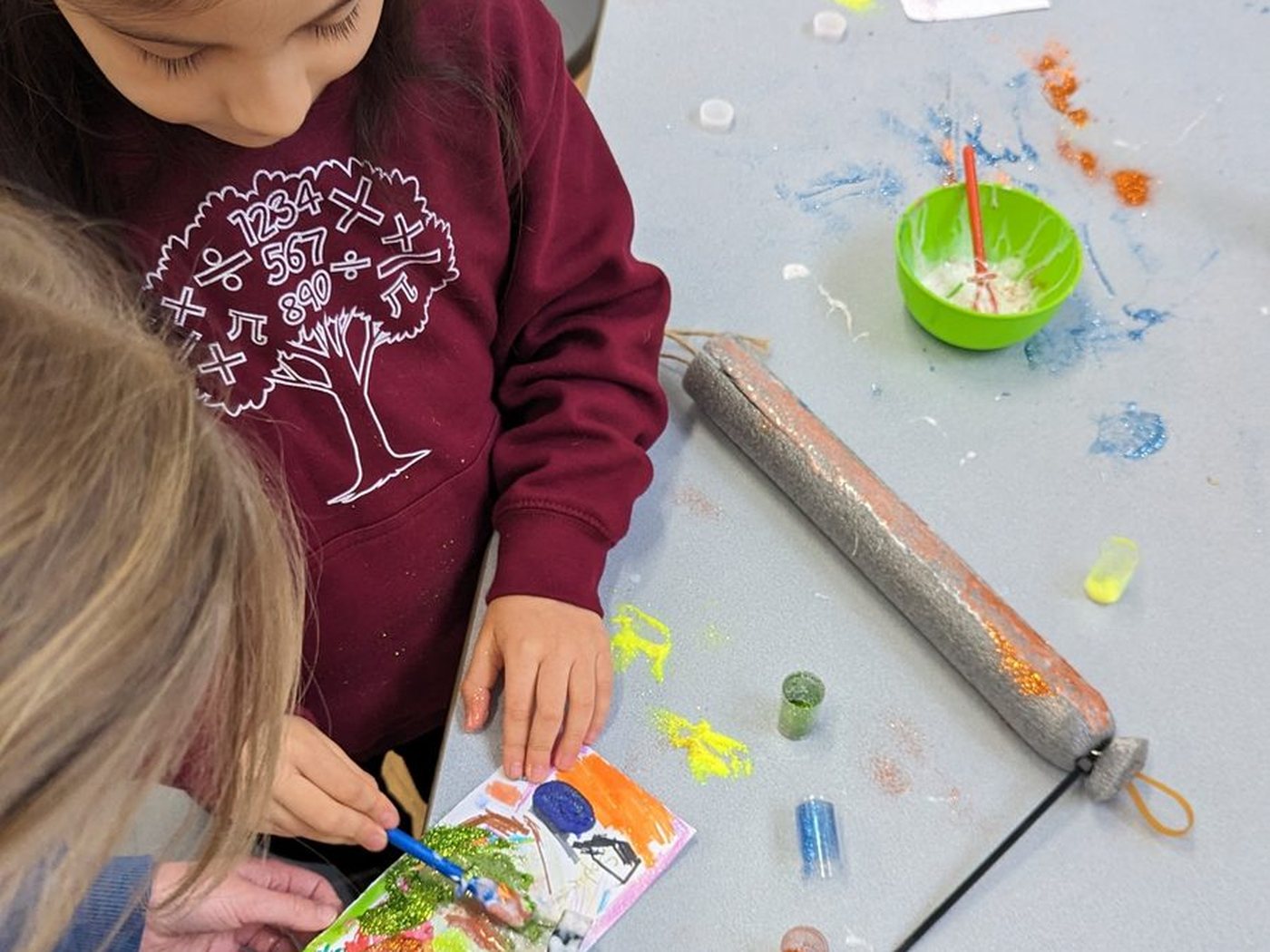
STEM is science, technology, engineering and maths. STEAM adds the arts, and in a primary club that matters more than it sounds: designing a mission patch, sketching a lander before building it, or explaining a result to the group are the parts where children who do not yet think of themselves as “science people” get a foothold. Our sessions are STEAM by design for that reason.
The letters say nothing about quality. A STEM club can be a volunteer with a science book, a franchise with a crate of plastic, or a programme designed by engineers. All three use the same four letters.
What a good STEM club looks like
A structure the children can feel
Children relax when they know the shape of the hour. Ours runs on five phases every week: Launch (a hook worth caring about), Explore (just enough science to build with), Build (hands on materials, the heart of the session), Challenge (every build meets its test in front of the whole crew) and Debrief (what did we learn, and what flies home?). The names matter less than the consistency. Ask any club what its session looks like; if the answer is “it depends”, it depends.
A real build, every session
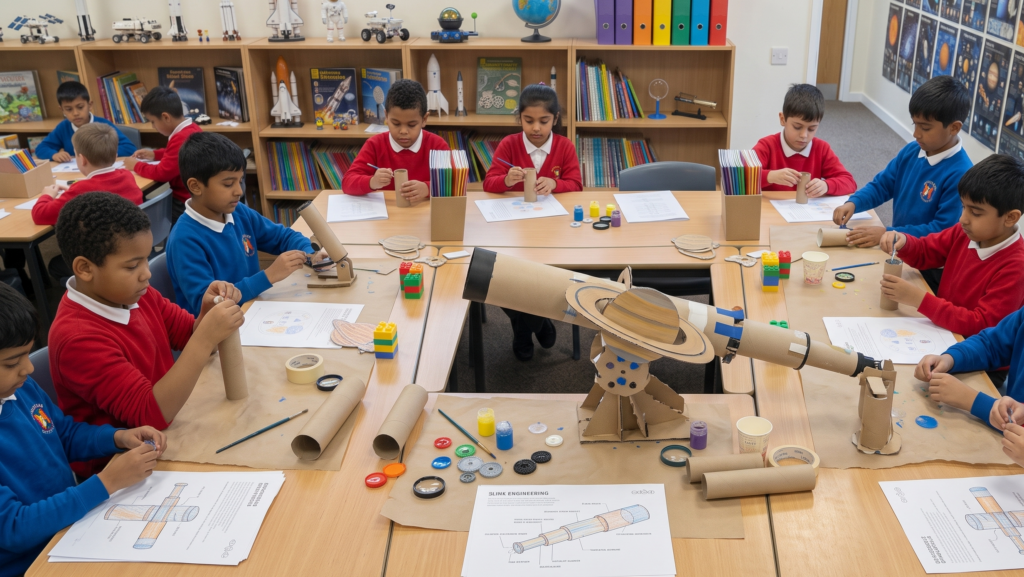
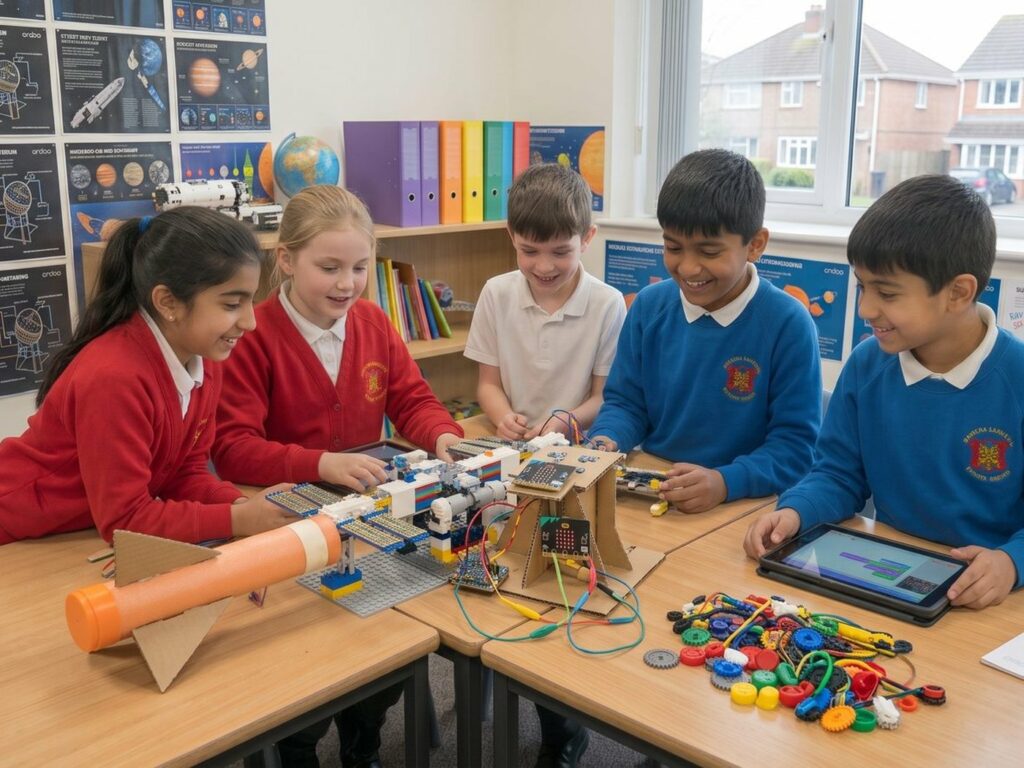
The child makes something or decides something every single week. A lander that has to protect an egg through a drop test. A satellite with a mass budget that does not add up until someone takes something off. A circuit with an LED that does not light until the fault is found. The first attempt failing and the redesign working is the lesson, and a club that never lets a build fail is not teaching engineering.
The same tutor, every week
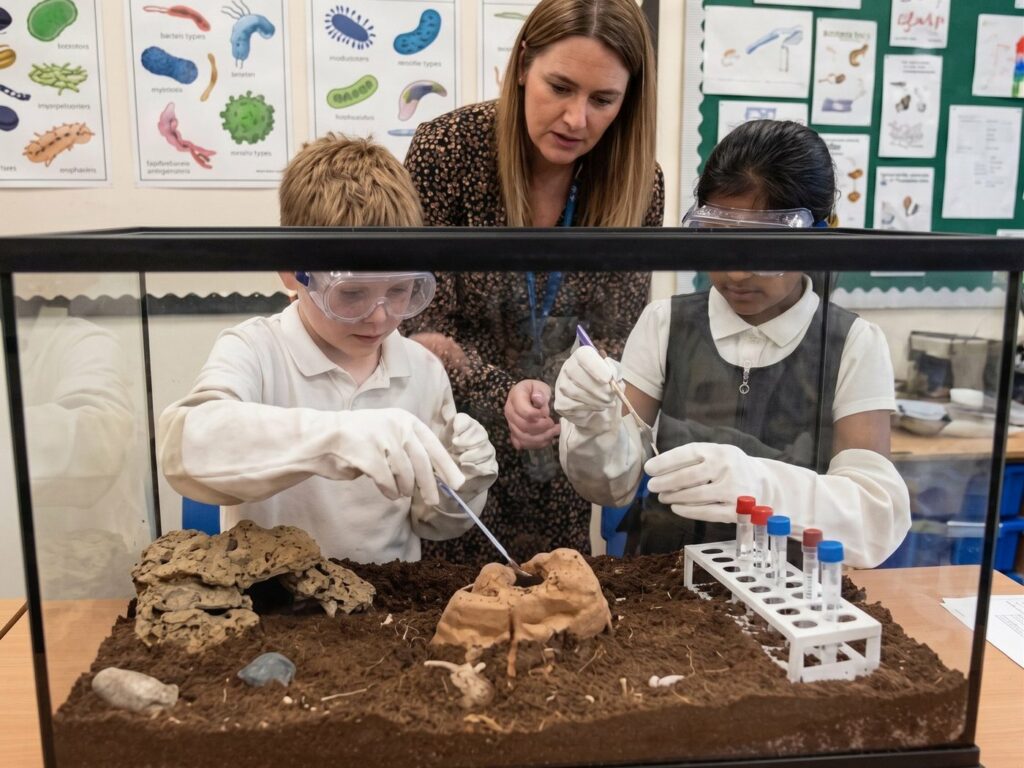
A rotating cast of staff means nobody notices the quiet child who has stopped putting their hand up. Ask who runs the sessions, whether it is the same person each week, and what training and checks they have. Ours are DBS-checked, safeguarding-trained and certified through our own programme before they run a session, and the same Mission Specialist returns each week.
A floor and a ceiling
Mixed ability is the normal state of a primary club. A well-designed mission has a floor, the thing the least confident child completes, and a ceiling for the fastest, both written into the plan before the session runs. “Pitched to the average child” is how you lose both ends of the room.
Skills named out loud
Children do not notice they are persevering unless someone says so. We name eight skills and call them out in the Debrief, so “that was Adapting” becomes language children use about themselves, and we award four badges each term in front of the crew. Whatever the framework, ask whether the club tells children what they are getting better at.
An end point
A term should go somewhere. Ours opens with an identity session (patches and team names) and closes with a graduation: badges, photos and something to take home. Parents should be able to see the term, not just hear about it.

How to judge a club before you sign up
- Ask to see a session plan. Not the brochure, a plan for one hour. If it exists, the club is designed. If it does not, it is improvised.
- Ask what the children took home last week. A build, a certificate, a photo of a test. “A worksheet” is an answer too.
- Ask how missions link to the curriculum. In England the Year 5 science topic is Earth and Space, and forces, electricity, light and materials run through KS1 and KS2. A club that can point to the objectives is enrichment; one that cannot is childcare with a theme.
- Ask who pays and who gets help. Schools can fund a club from an enrichment budget or parents can pay termly. Ask whether subsidised places exist. As a Community Interest Company we keep a number of bursary places every term, because access is the point.
- Ask to watch one. The fastest way to judge a club is ten minutes of children mid-mission.
STEM clubs in London
London has more after-school STEM provision than anywhere else in the country and the widest range of quality, from franchise coding clubs to one-off workshops to school-run science clubs staffed by a teacher on their own time. The questions above apply with more force, not less, because the choice is large enough that you do not have to settle.
Two things are specific to the capital. First, the gap: provision clusters in some boroughs and barely exists in others, which is why we deliberately expand into schools where STEM access is thinnest and keep bursary places open. Second, the route in: most London clubs, ours included, start because one parent asked one teacher. If your child’s school has nothing, that is usually how it changes. We do not publish the names of our partner schools, but we will tell you whether we are already in conversation with yours.
The Space Club, as an example of the above
The Space Club is our weekly after-school club for ages five to eleven, run inside the school by a trained Mission Specialist. A library of more than a hundred missions (rockets, rovers, circuits, craters, coding, spacesuits) with no mission repeated within a year, a five-phase session design written by a spacecraft engineer, curriculum links to KS1 and KS2, a termly impact report for the school, and every material brought in and taken away. Schools usually start with a free whole-school assembly and a parent interest session; if families want the club, it starts the following term.
If you are a teacher thinking of starting something yourself, we have written how to start a science club at a primary school, including the honest version of what it costs in time.
Questions parents ask about STEM clubs
What age can children join a STEM club?
Most primary clubs run from Reception or Year 1 to Year 6. Good ones group by age or build a floor and ceiling into every activity so a five year old and a ten year old can both finish.
How much does a STEM club cost?
It varies with group size and frequency and with who pays, school or parents. Ask for an itemised price per term and whether subsidised places exist.
Is a STEM club the same as a coding club?
No. Coding is one strand of the T in STEM. A STEM club should also build, test and measure things in the physical world; coding a rover that then has to drive across the floor is STEM, coding on its own is coding.

Mirko Viviano
Founder of Louno Space Education CIC. Runs space-themed STEAM clubs, workshops and assemblies in primary schools across the UK.