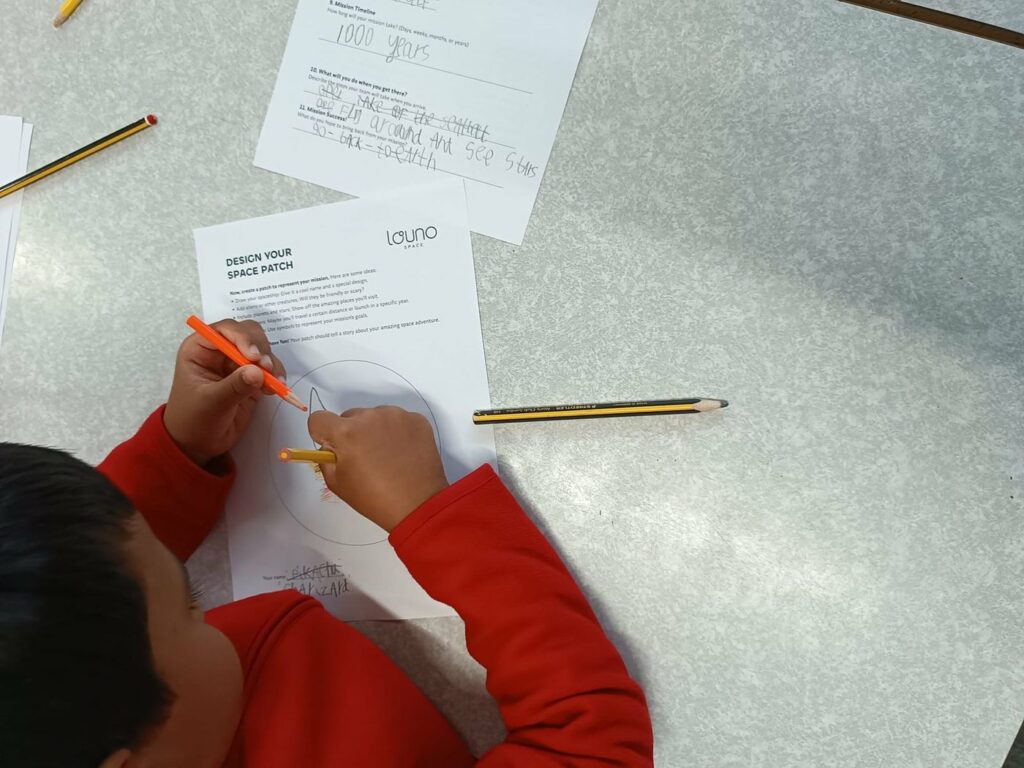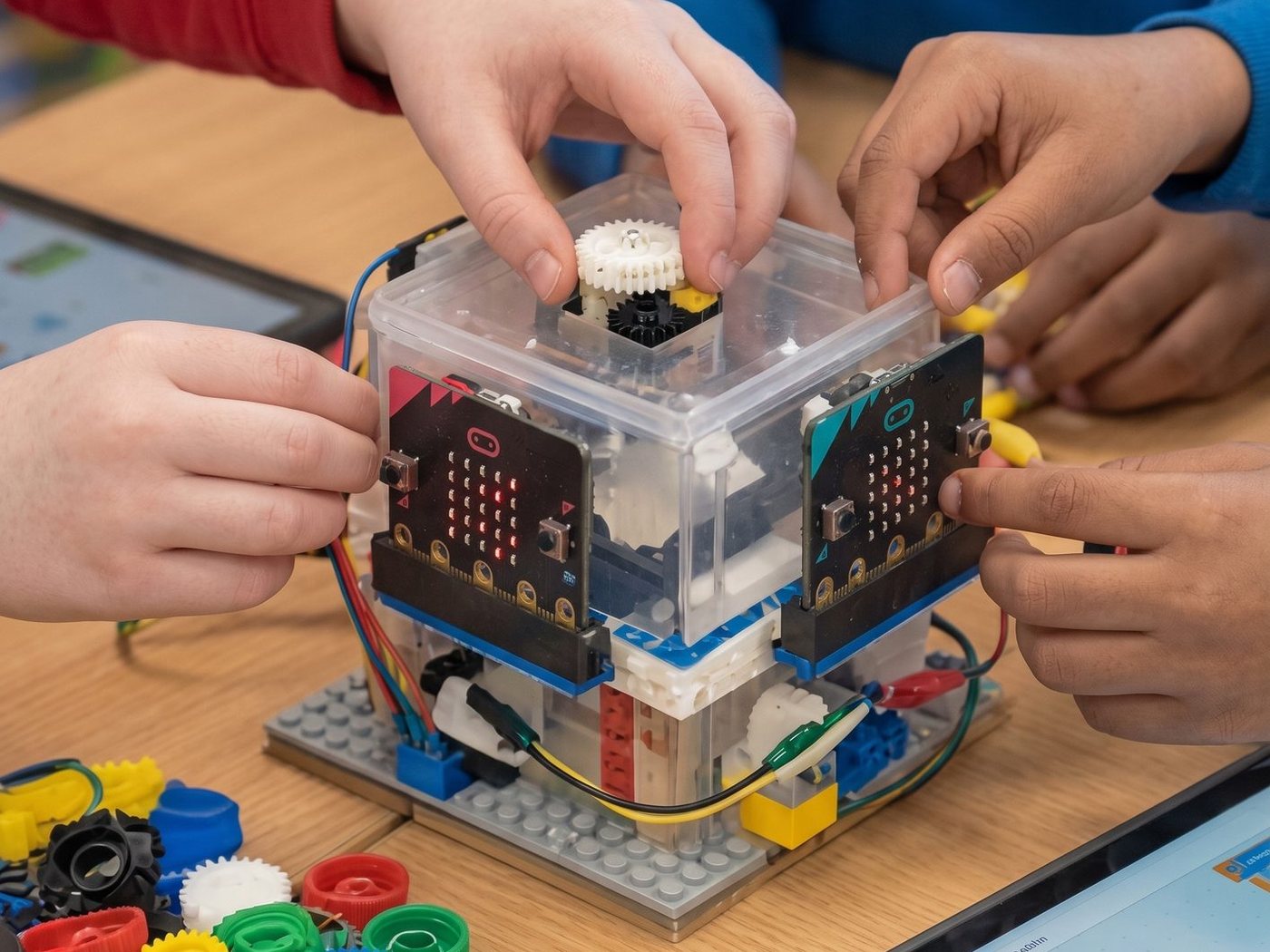
A good space workshop for a primary school is hands-on from start to finish, linked to what your class is learning, and led by someone who can answer the questions children always ask. This guide covers the types of space workshops schools book, from a single class session to a whole-school STEM day, what to ask before you book, and how to get the most out of the visit.
It is written by space engineers who run workshops and assemblies in primary schools.
Types of space workshop for schools
| Format | Who it suits | Typical length |
|---|---|---|
| Whole-school assembly | Every year group at once, to launch a topic or a science week | 30 to 45 minutes |
| Class workshop | One class, hands-on, tied to a topic | 45 to 60 minutes per class |
| Year group day | Every class in a year group, one after another | Half day or full day |
| Science or STEM week | Several year groups across a week | 1 to 5 days |
| After-school club | Children who want more, every week | 1 hour a week, termly |
Schools often combine two: an assembly in the morning to excite the whole school, then class workshops for the year group studying space.
What a good space workshop includes
- Every child builds something. A rocket, a lander, a satellite or a rover. Watching a demo is good. Making one is better.
- A real test. Children launch, drop or drive what they built, measure it, change one thing and test again. That is working scientifically, and it is the part they remember.
- A real person. Someone who works in space or engineering, who can say “I do this for my job”.
- Curriculum links. Clear links to what the class is learning, so the workshop counts as teaching time.
- Something to take home. A build, a certificate or a challenge for home keeps the conversation going with families.

See us in action first
Start with The Journey Up, our free 45-minute whole-school space assembly.
Space workshops by key stage
EYFS and KS1
Story first, then a simple make. A Moon landing workshop works well, especially in Year 1 and Year 2 where Neil Armstrong is a common history topic: children join the Apollo 11 mission, land in a tray of Moon dust and then build a rocket to launch. Our Neil Armstrong activities for KS1 post has a full week to build around it.
Lower KS2: Year 3 and Year 4
Forces and materials. Straw rocket ranges, parachutes for a Mars landing and testing which materials protect an egg. Children start to change one variable at a time and record their results.
Upper KS2: Year 5 and Year 6
Earth and space is on the Year 5 science curriculum, so this is the best time for a space workshop: the Sun, Earth and Moon, day and night, and why planets orbit. Year 6 can take on a full engineering challenge, such as designing a satellite to a budget or coding a rover.
Questions to ask before you book
- Who will lead the workshop? Ask about their background and whether they work in space or STEM.
- What will every child make or do? Look for hands-on time for every child.
- How does it link to our curriculum? A good provider will tell you which units it supports.
- How many children per session? A full class of 30 works for most class workshops. Assemblies take the whole school.
- What do we need to provide? Usually a room or hall, tables and a member of staff in the room.
- Are staff DBS checked and insured? Ask for the risk assessment for any launches.
- What does it cost, and what is included? Check whether materials, take-home builds and travel are in the price.
Getting the most from the visit
- Book 6 to 8 weeks ahead for World Space Week (4 to 10 October) and British Science Week (March). Those weeks fill first.
- Start with the question. Give the class one question the week before, such as “how do rockets get off the ground?”, and let the workshop answer it.
- Follow up the same week. Our World Space Week plan for schools has a Monday to Friday set of activities that work after any space workshop.
- Tell families. A line in the newsletter and a photo of the launches gets children talking about it at home.
Space workshops from Louno Space
Louno Space runs space and STEM workshops for primary schools, led by engineers who work on real space missions. We offer:
- The Journey Up, a free whole-school space assembly, 45 minutes, Reception to Year 6
- Class workshops, such as Build a Rocket and the Moon landing for KS1, about 45 minutes per class, with every child taking their build home
- Science week and STEM days, combining the assembly with workshops across year groups
- Space Club, a weekly after-school club for KS2
We bring all equipment and materials, and our team is DBS checked and insured. Our local teams are in Hampshire, London, Essex and York, and we travel further for groups of nearby schools. Tell us what you are planning and we will reply with a plan and a price within one working day.
Questions teachers ask about space workshops
How much does a space workshop for a school cost?
Prices vary by provider, length and the number of classes. Most charge per session or per day, with materials included. Louno Space’s whole-school assembly is free, and we quote class workshops on request.
Which year group is best for a space workshop?
Year 5, where Earth and space is on the science curriculum, and Year 1 and Year 2 for the Moon landing and Neil Armstrong. A whole-school assembly works for every year group.
Can a space workshop run during British Science Week?
Yes, and it is one of the most popular weeks for booking. Book 6 to 8 weeks ahead to secure a date.
Do space workshops need a hall?
A class workshop runs in a normal classroom with tables. An assembly needs the hall and a projector.

Mirko Viviano
Founder of Louno Space Education CIC. Runs space-themed STEAM clubs, workshops and assemblies in primary schools across the UK.
Make space a weekly mission
The Space Club runs after school, with a real build every week.