World Space Week runs from Sunday 4 to Saturday 10 October, and the easiest way to celebrate it at home is one small space activity a day. Here are seven World Space Week activities for kids, one for each day, each about twenty minutes long and made from things you already have: a balloon, some straws, a ball of foil and a clear evening.
They follow the 2026 theme, the Rocket Revolution, so the week builds up to a launch on Saturday. They work for children from about five to eleven, with a grown-up helping the younger ones.
| Day | Activity | You need |
|---|---|---|
| Sunday 4 October | Build Sputnik, the first satellite | A small ball, foil, four straws |
| Monday 5 October | Spot the space station | A clear evening |
| Tuesday 6 October | Balloon rocket on a string | Balloon, straw, string, tape |
| Wednesday 7 October | Start a Moon diary | Paper and a pencil |
| Thursday 8 October | Straw rockets and the fin test | Paper, tape, straws |
| Friday 9 October | Design a rocket that lands | An egg, paper, straws, tape |
| Saturday 10 October | Launch day | A park, or a Portsmouth library |
Sunday 4 October: build Sputnik, the first satellite
World Space Week starts on the anniversary of Sputnik 1, launched on 4 October 1957. It was a metal ball about the size of a beach ball with four long antennae, and it did one thing: it beeped. Wrap a small ball in foil, push in four straws for antennae, and look up a recording of its real signal online together.
What it teaches: a satellite is just something that goes round the Earth without falling down. Ask the question the whole world asked in 1957: if a beeping ball can get up there, what else could?
Monday 5 October: spot the space station
The International Space Station is one of the brightest things in the night sky, often brighter than any star or planet, and it crosses the whole sky in a few minutes. NASA’s free Spot the Station service tells you when it passes over your town. Go outside five minutes early, look where it says, and watch for a bright, steady light that does not blink.
What it teaches: there are people living up there right now, travelling at about 28,000 kilometres an hour. It is the most exciting thing a child can see without a telescope.
Tuesday 6 October: balloon rocket on a string
Thread a drinking straw onto a long piece of string and tie the string tight across a room. Blow up a balloon, hold the neck shut, tape the balloon to the straw and let go. It shoots along the string. Then race a small balloon against a big one, and measure how far each goes.
What it teaches: this is exactly how a real rocket works. Air rushes out of the back, and the balloon is pushed the other way. Our explainer on how rockets work has the version for a seven-year-old and the version for a nine-year-old.
Wednesday 7 October: start a Moon diary
Each clear evening from today until Saturday, go outside at the same time and draw the Moon: its shape, and where it sits compared with a tree, a roof or a lamp post. Four drawings are enough.
What it teaches: by the weekend your child has proof, in their own handwriting, that the Moon changes shape and moves across the sky. That is a very good question to take to bed.
Thursday 8 October: straw rockets and the fin test
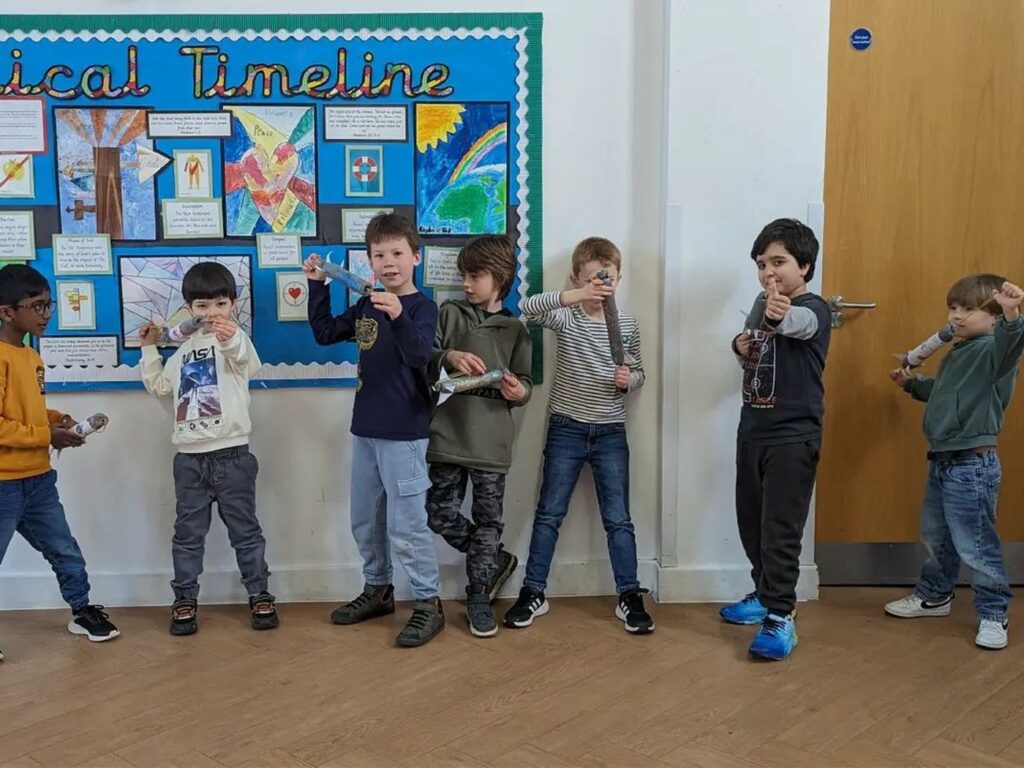
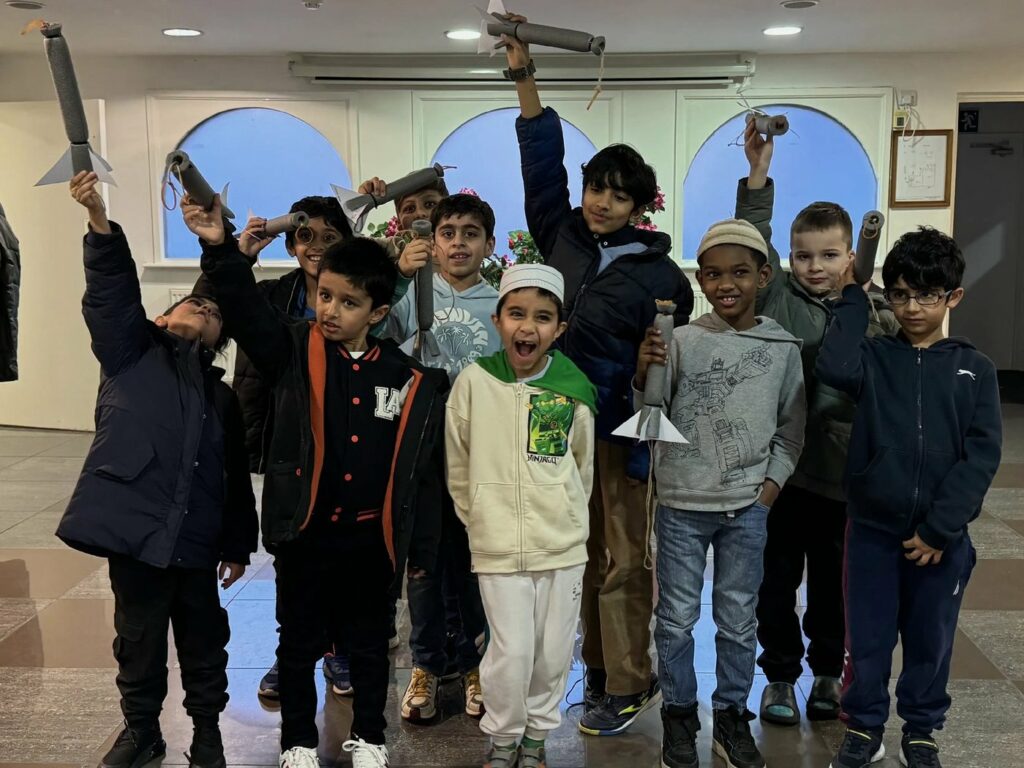
Roll a strip of paper round a pencil and tape it into a tube. Fold and tape one end shut, slide the tube onto a drinking straw and blow. Now make three rockets: one with no fins, one with small fins and one with big fins. Launch each one three times and see which flies straightest.
What it teaches: fins keep a rocket pointing the right way, and changing one thing at a time is how engineers find out what works. It is the same question our library workshops start with.
Friday 9 October: design a rocket that lands
This is the Rocket Revolution in one challenge. Modern rockets come back down and fly again, so they have to land gently. Give your child an egg, some paper, straws and tape, and ask them to build something that carries the egg from the top of the stairs to the bottom without breaking it. Put a tray down first.
What it teaches: parachutes, crumple zones and legs are all real ideas engineers have tried, and air resistance is what slows things down. A broken egg is just data.
Saturday 10 October: launch day
End the week with a proper launch. A water rocket in the park is the best finale there is, and our step-by-step bottle rocket guide has the build and the safety rules we use at every launch we run.
If you live near Portsmouth, bring the week to a close at the library instead. We are running Build Your Rocket at Central Library and Southsea Library with Portsmouth City Council, where children aged 5 to 11 design, build and launch a rocket with a real engineer. You can book a place for £4.
Tips for doing it as a family
- Skip days freely. Two or three activities still make a World Space Week. The Moon diary and the space station need clear skies, so swap them around if it is cloudy.
- Let them predict first. Before every launch, ask what they think will happen. Being wrong is where the learning is.
- Keep the results. A page of measurements and drawings is something to take into school on Monday.
After World Space Week: keep the missions going with Nova
A week of balloon rockets and Moon diaries usually leaves a child with more questions than they started with. That is the point, and it is why we are building Nova.
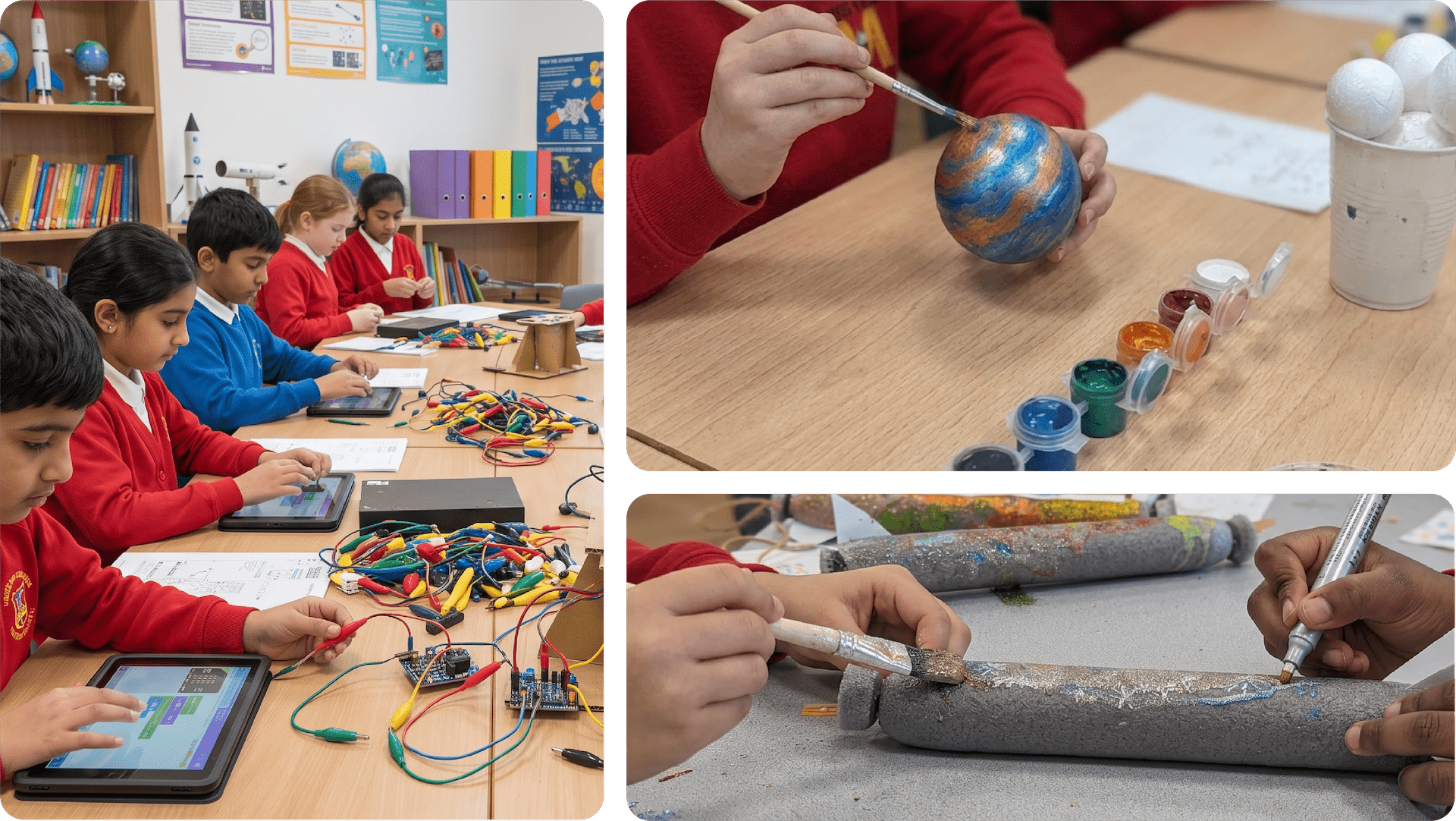
Nova is an AI learning companion for children aged 7 to 11, from the same team behind these activities and our Space Club. It turns space into short missions on a tablet or Chromebook: a conversation with Nova, a mini-game pitched at your child’s level, and a question worth taking to the dinner table. Every mission maps to the Key Stage 2 curriculum in science, maths, computing and design and technology.
The part built for parents is what you get back. Instead of a score, Nova shows you six separate skills, so you can see where your child’s spark is and what to feed next:
- Cosmos: space, Earth and how the universe works.
- Engineering: building, testing and fixing things.
- Mathematics: numbers, patterns and problem solving.
- Coding: logic, sequences and computational thinking.
- Investigation: asking why, predicting and checking, exactly what the fin test on Thursday practises.
- Creativity: original ideas, like Friday’s egg lander.
There are no marks and no leaderboards. Nova is not open yet: early access is free, families on the waitlist get in first, in the order they signed up, and they keep a founding price if paid plans arrive later. Join the Nova waitlist with just an email address, and you will get one email when doors open.
Teachers planning the week for a class can use our World Space Week activities for schools, with curriculum links and a Monday to Friday plan.
Questions about World Space Week activities
When is World Space Week 2026?
World Space Week 2026 runs from Sunday 4 October to Saturday 10 October. The dates are the same every year.
Do I need to buy anything?
No. Every activity uses things most homes already have: balloons, straws, paper, tape, string, foil and an egg.
What age are these activities for?
Roughly five to eleven. Younger children will need a grown-up for taping and cutting; older ones can run the fin test and the egg challenge on their own.
How can my child keep exploring space after World Space Week?
Keep the Moon diary going for a whole month to see a full cycle, and try the bottle rocket build on a dry weekend. For something to come back to, join the free waitlist for Nova, our AI learning companion that turns space into short missions for 7 to 11 year olds.
Is there a World Space Week event near me?
Events are listed on the official World Space Week website. In Portsmouth, we are running Build Your Rocket at Central and Southsea libraries on Saturday 10 October.

Mirko Viviano
Founder of Louno Space Education CIC. Runs space-themed STEAM clubs, workshops and assemblies in primary schools across the UK.