Here is how to make a bottle rocket for a children’s party, the way we do it at ours: a two-litre fizzy-drink bottle a third full of water, a cork or rubber bung, a bicycle pump with a ball needle, a simple launch stand, and a set of rules that everyone follows. It takes twenty minutes to build, flies higher than the house, and is the loudest moment of any space party we run.
It is also the one activity where the safety rules are not optional. Pressurised water and a flying bottle are exactly as exciting as they sound, so this guide spends as long on how to launch as on how to build. Read to the end before you buy a bottle.
What you need
- A two-litre plastic fizzy-drink bottle, empty and undamaged. It must be a carbonated-drink bottle: they are made to hold pressure. Water and juice bottles are not.
- A cork or a rubber bung that fits the bottle neck snugly. A wine cork trimmed to fit works.
- A bicycle pump with a ball-inflation needle, pushed right through the cork so the tip comes out the other side.
- A launch stand that holds the bottle upside down, neck to the ground, pointing straight up: three garden canes lashed into a tripod, or a bought water-rocket launcher if you want a remote release.
- Card, tape and a plastic cone (the top of a second bottle, or a rolled card cone) for fins and a nose.
- Water, an open space at least ten metres across, and a line on the ground that nobody crosses.
Build it: twenty minutes with the crew
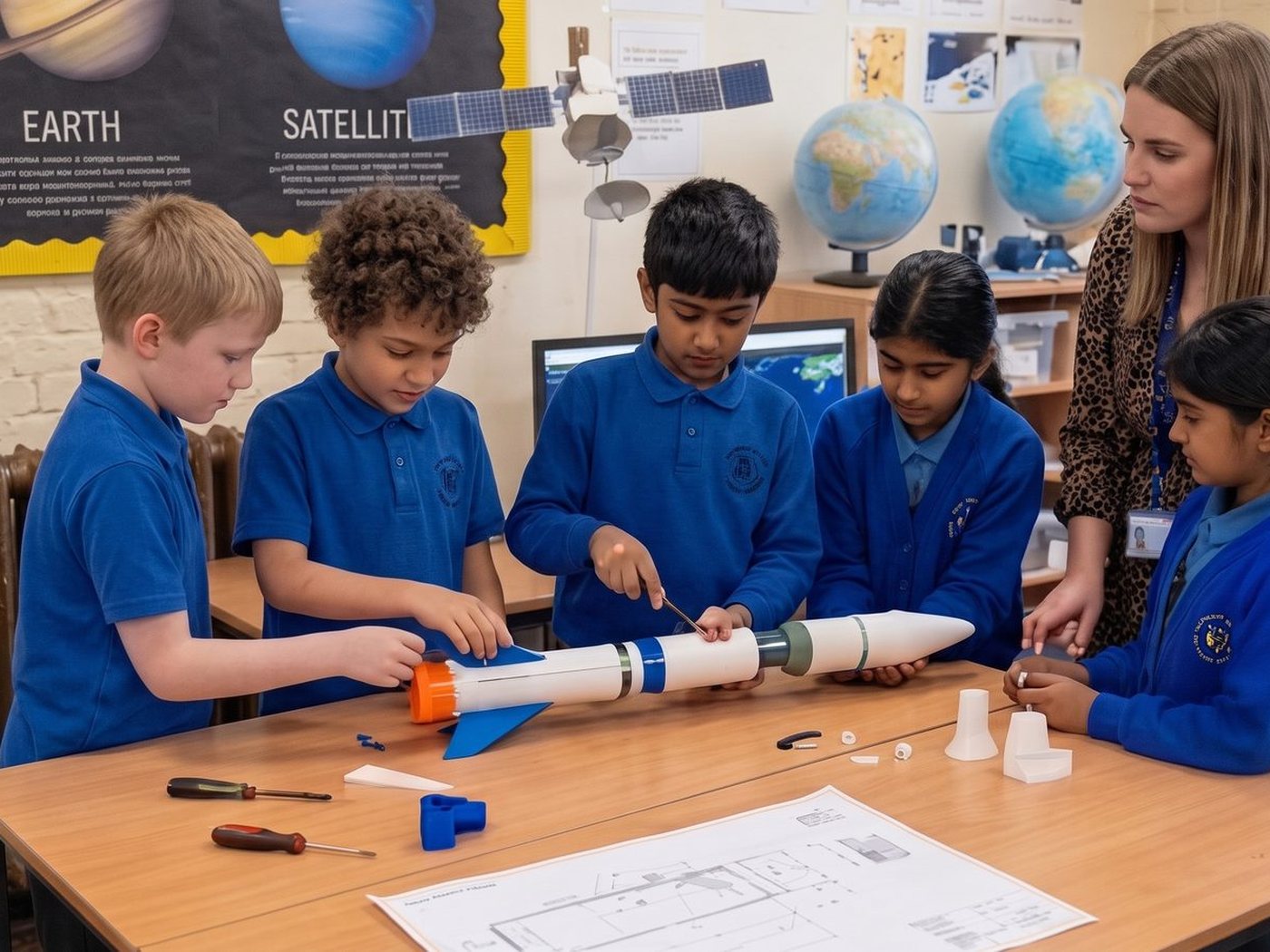
The build is the part children do. The launch is the part an adult does. Keep that line clear from the start and the whole thing runs calmly.
- Fins. Cut three or four fins from card (cereal boxes are ideal). Tape them evenly around the neck end of the bottle, which will be the bottom of the rocket. Fins at the bottom, every time. Ask the crew why, and let a straw-rocket test answer it if they are not sure.
- Nose cone. Tape a cone onto the flat base of the bottle, which is now the top. A blob of modelling clay inside the cone moves the weight forward and makes the flight straighter.
- Decorate. Paint, stickers, a name, a mission patch. This is where most of the twenty minutes goes and it is time well spent.
- Fuel. Fill the bottle about a third with water. More water means more mass to push but less air to push with; a third is the sweet spot, and older children can test a quarter and a half to prove it.
- Cork. Push the cork with the pump needle through it firmly into the neck. Firm, not hammered: the cork has to pop out on its own when the pressure is right.

Launch it: the rules we use at every party
One adult owns the launcher. Everyone else, including other adults, stays behind the line. These are the rules we brief before a single rocket goes on the stand, and we say them out loud to the children, because a crew that knows the rules polices them for you.
- Outdoors only, in an open space, away from windows, cars and overhead wires. A garden is fine if it is a clear garden. A park is better.
- A line five metres from the stand, and nobody crosses it while a bottle is on the launcher. Use a skipping rope or a line of cones so it is visible.
- The pumper wears safety glasses and pumps from arm’s length, never leaning over the rocket. Water and a cork at speed are the hazard.
- Never stand over a pressurised bottle. If it does not launch, stop pumping, wait a full minute, then release the pressure by easing the cork out sideways with the bottle pointing away from everyone.
- Inspect the bottle between launches. Any crease, split or cloudy patch and it is retired. A two-litre bottle will take a dozen launches; do not push for twenty.
- Count down out loud. The Mission Commander leads it from ten. It is the best moment of the party and it also tells everyone exactly when to watch and when to stand still.
Then pump. With a third of water and a snug cork, most launches release somewhere around the thirtieth to fiftieth stroke of a hand pump. The cork pops, the water fires downward, the bottle goes up. Expect twenty to thirty metres from a good one, which is higher than most houses and enough to make a nine year old shout.
What is actually happening
Say this once, in one breath, after the first launch, and then stop talking. The pump squeezes air into the bottle. The air pushes on the water. When the push is bigger than the cork’s grip, the cork lets go and the air shoves the water out of the neck at speed. Pushing the water down pushes the bottle up. That is the same rule that lifts a real rocket, where hot gas goes out of the bottom instead of water. If they want the longer version, we have written how rockets work, for a seven year old.
For older children, turn it into a test. Launch the same bottle with a quarter, a third and a half of water and ask which went highest and why. Launch with fins and without. The answers are visible, which is the whole point of doing it with a bottle instead of a worksheet.
Making it work at a party
One launcher, one rocket per child is the ideal and takes about two minutes per launch, so for ten children plan twenty minutes at the launch line. If you only have one bottle, build one rocket as a crew and launch it ten times, with a different child leading each countdown. Nobody has ever complained about that.
Put the launch at the end of the build, before food, while the clothes are still dry enough to get wet. Have a towel. Somebody always runs through the landing spray. It is usually the birthday child.
If you would rather we brought the rockets
At a Louno Space birthday party the Rocketry mission is exactly this: every child builds a rocket, and a DBS-checked space engineer runs the launch with the kit, the launcher and the safety line all brought along. Ninety minutes at your home or venue, ages six to eleven, £180 for up to ten children. You bring the cake and a towel.
Questions we get asked about bottle rockets
How high does a bottle rocket go?
A two-litre bottle with a third of water and a hand pump typically reaches twenty to thirty metres. Higher with a better seal and more pressure, which is exactly why the safety rules matter.
Can you launch a bottle rocket indoors?
No. Indoors, use straw rockets or a foam stomp rocket. Water rockets need open sky and a line on the ground.
What age is a bottle rocket suitable for?
Any age can build and decorate one and lead the countdown. The pumping and the launch stand are always an adult’s job, whatever the age of the crew.

Mirko Viviano
Founder of Louno Space Education CIC. Runs space-themed STEAM clubs, workshops and assemblies in primary schools across the UK.