Girls do not leave science at university, or at A level, or even at GCSE. The research is consistent that children’s ideas about whether science is “for people like me” are largely set between the ages of about ten and fourteen, and that the drift starts in primary school. So if the aim is more women in STEM, the useful question for a primary teacher or a parent is not how to retain women. It is how not to lose eight year old girls. Here is what we have seen work, in clubs where half the crew are girls because we designed it that way.
When it happens
Ask a class of five year olds to draw a scientist and a good share of the girls draw a woman. Ask the same question at eleven and most of them draw a man. Nothing about the children’s ability changed in those six years. What changed is who they think does this. The long-running ASPIRES research at UCL found that interest in science stays high through primary school; what falls is the sense that a science career is possible for “someone like me”, and it falls earliest and furthest for girls and for children from families without a scientist in them.
In the UK today women make up roughly one engineer in six. That number was decided, mostly, in primary classrooms fifteen years ago.
Why it happens
Not one thing. A few small ones, repeated.
- Who is in the pictures. The posters, the books, the visitors, the examples in the lesson. If every engineer a child meets is a man, the conclusion draws itself.
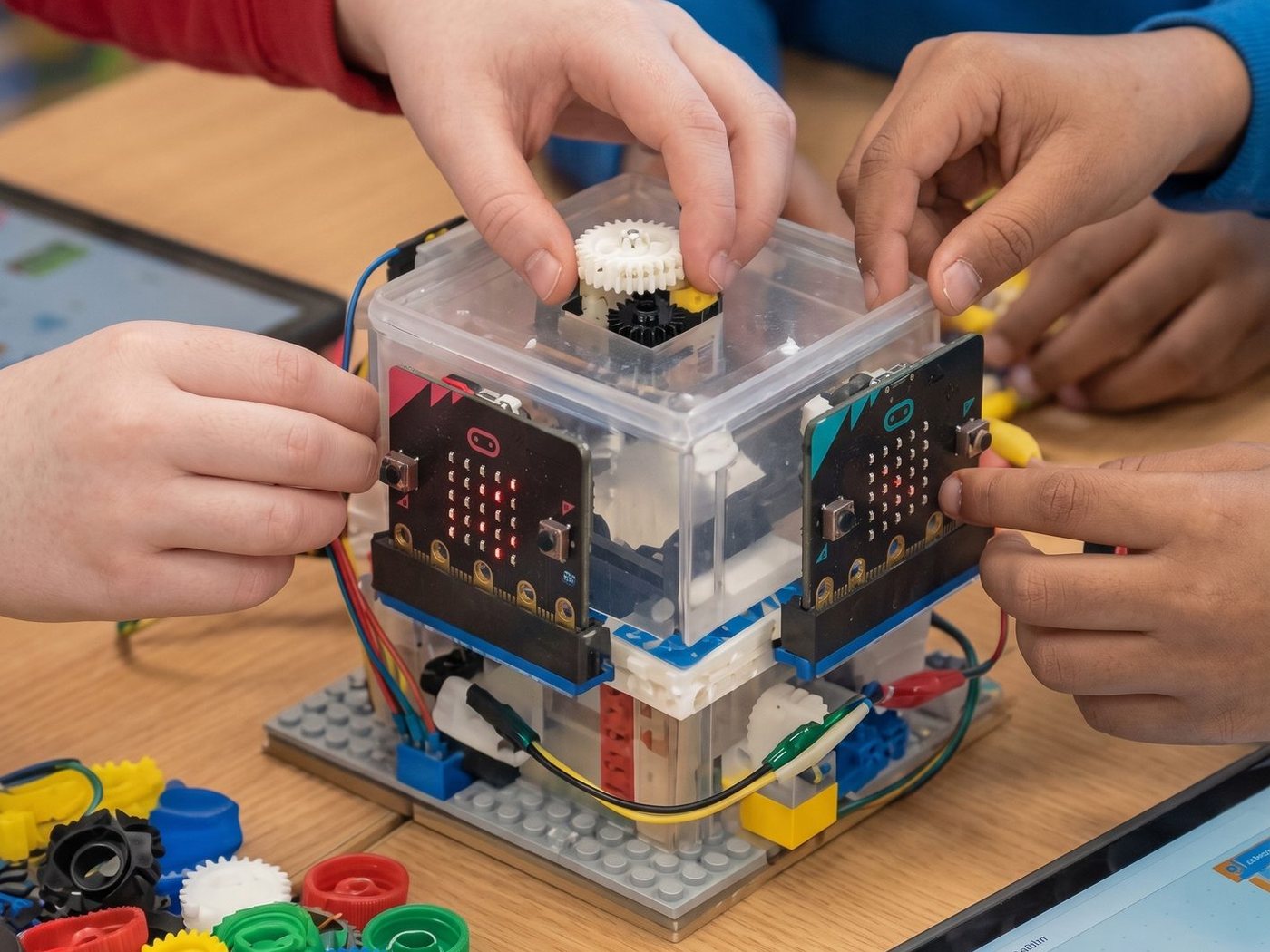
- Who gets the tools. In mixed groups, boys more often end up holding the screwdriver and girls more often end up holding the worksheet. Nobody plans it. It just happens, every session, unless somebody stops it.
- What “good at science” looks like. If it means being fastest and loudest with the answer, it rewards the confident half of the room. If it means noticing, checking and trying again, a different half gets to be good at it.
- What the subject is for. Girls, on average, are more likely to stay with science when they can see who it helps. A circuit is a circuit; a circuit that keeps an astronaut warm is a reason.
What a primary school can change
Rotate the roles, out loud
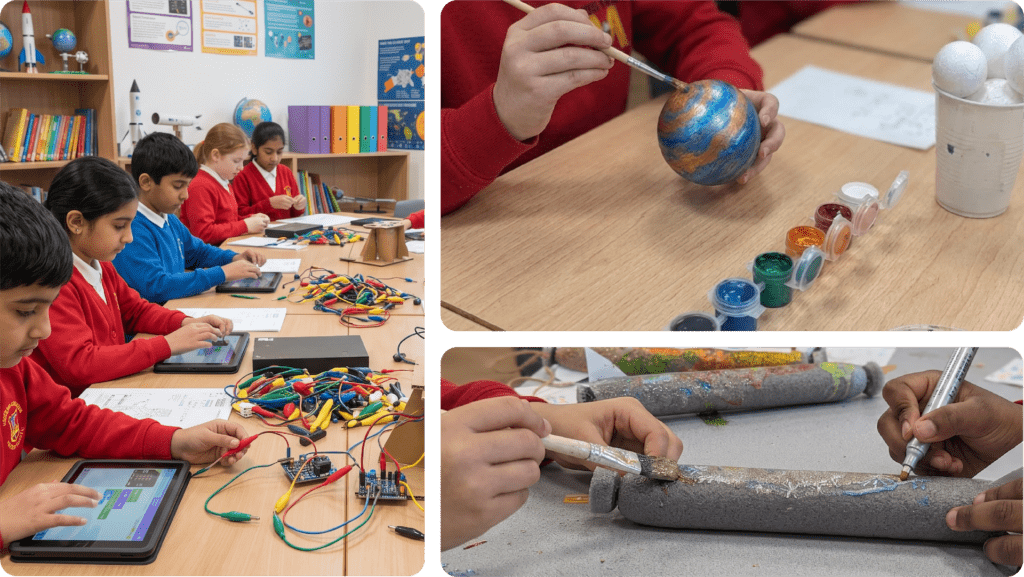
Every mission we run has named crew roles: builder, tester, recorder, presenter. They rotate every week, and the rotation is announced, so the child who always grabs the kit does not get it this time and the child who always writes things down is the one holding the rocket. It is the single cheapest change on this list and it moves the most.
Make failure the normal outcome
A lander that breaks the egg on the first drop is the plan, not a problem. When the first attempt is expected to fail, the children who hang back until they are sure stop hanging back, because there is nothing to be sure of. We have watched this flip a girl from the edge of a group to the middle of it in one session.
Name the skill, not the child
“That was adapting” lands differently from “you’re good at science”. The first is something you did and can do again; the second is a label that can be lost. We name eight skills and call them out in the debrief of every session, and we make sure the quiet successes get named as often as the loud ones.
Show the people, on purpose
In our assemblies the “meet the engineers” section is deliberately varied: the people who work in space include scientists, coders, artists and planners, and plenty of them are women. You can do the same with a visitor, a video or a wall. The test is simple: could every child in the room find someone who looks like them?
Give the science a reason
Build the circuit that keeps the astronaut warm. Design the habitat that keeps the crew alive. Budget the satellite that photographs the floods. The science is identical to the textbook version; the reason is what keeps a wider set of children in the room.
What parents can do at home
- Hand her the screwdriver. Literally. Let her build the flat-pack, change the batteries, fix the bike.
- Ask “what did you try?” rather than “did you get it right?”
- Find one woman who does a job she finds interesting, and talk about her as a person, not an exception.
- Pick a club, not a kit. A box of experiments done alone teaches a lot less than a crew that tests things together every week.
What we do about it
Louno Space is a Community Interest Company, and widening who gets to do this is written into what we are for, not added on. Our sessions have a floor and a ceiling written into the plan so the least confident child finishes and the fastest is stretched; roles rotate; skills are named; the role models are chosen. We keep subsidised places every term and we deliberately go into schools where STEM access is thinnest. If you want to see it working, the free whole-school assembly is where it starts, and the Space Club is where it carries on, every week, with the girls holding the rockets as often as the boys.

Mirko Viviano
Founder of Louno Space Education CIC. Runs space-themed STEAM clubs, workshops and assemblies in primary schools across the UK.