Can humans live on Mars? Not yet, and not easily, but it is the one other place in the solar system where the answer is “maybe, with a lot of engineering” rather than “no”. The air is too thin to breathe, the cold would kill you in minutes and there is no magnetic field to keep the radiation off. Every one of those is a problem people are working on right now, which is exactly what makes it such a good question to hand to a class.
We ask it in school halls and get a vote before we say anything. The room always splits. Here is what we tell them afterwards, and the build that turns the question into an hour of real engineering.
What Mars is actually like
Mars is smaller than Earth, about half the width, with a little over a third of the gravity, so you would weigh less and could jump higher. A day lasts 24 hours and 37 minutes, close enough to ours that the rover teams on Earth work to Mars time. There are seasons, because Mars is tilted like we are, and there are polar ice caps you can see through a telescope. It is the most Earth-like place we know of, and it is still trying to kill you.
The four problems, in the order they would get you
1. The air
Mars has an atmosphere, but it is about one per cent as thick as Earth’s and it is almost all carbon dioxide. You could not breathe it, and it is so thin that the water in your mouth and eyes would start to boil at body temperature. Outside means a pressure suit, always.
2. The cold
The average temperature is around minus 60 degrees. A summer afternoon at the equator can reach 20 degrees, which sounds pleasant until the sun goes down and it drops to minus 70 or worse. A habitat has to be insulated like a flask and heated all the time.
3. The radiation
Earth has a magnetic field and a thick atmosphere that together shield us from the Sun’s particles and from cosmic rays. Mars has neither to speak of, so the surface gets a dose that would be unsafe to live in for years. The likely answer is to live under a few metres of Martian soil, or inside the lava tubes that run under parts of the surface. The first Martian homes will probably be underground.
4. The water
There is water on Mars, but it is frozen, at the poles and under the ground, and nothing liquid lasts on the surface because the air is too thin. Getting at it means digging and melting. Every litre you do not have to bring from Earth is a litre of rocket fuel saved, so water is the first thing a real mission would go looking for.

What people have already worked out
This is the part children need to hear, because the list above sounds like “no”. In 2021 a toaster-sized experiment on the Perseverance rover made breathable oxygen out of Martian carbon dioxide, the first time anything has made oxygen on another planet. Rovers have been driving around for more than twenty years, which tells us a great deal about the dust, the ground and the weather. Habitats that could be built from Martian soil have been tested on Earth. None of it is a settlement yet. All of it is a problem being taken apart one piece at a time, which is what engineering is.
The build: design a Mars habitat
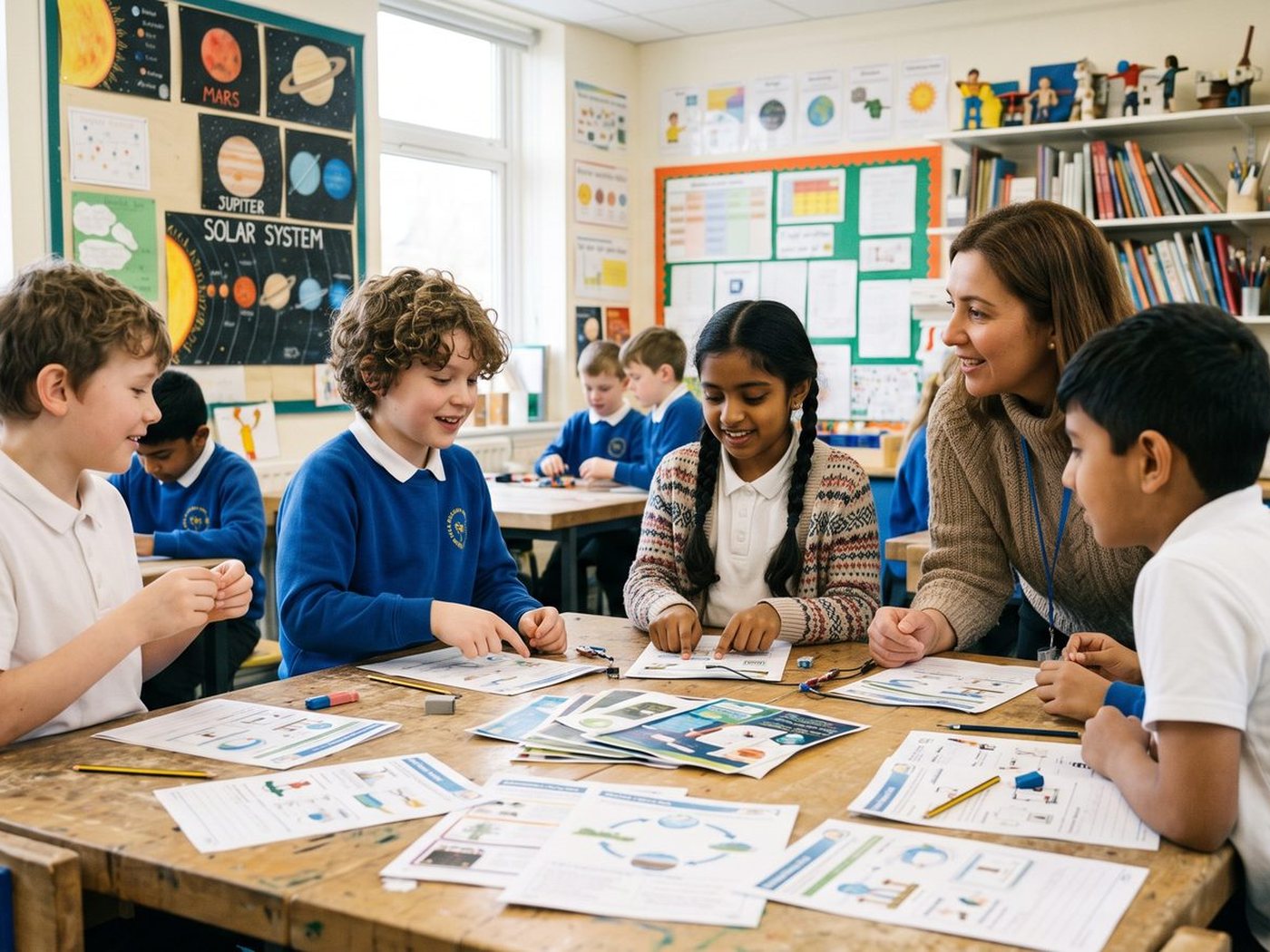
This is one of the missions we run with real crews, and it works in a classroom with a box of recycling. Put the four constraints on the board (thin air, minus 60, radiation, frozen water) and give each group a shoebox, foil, card, tape and forty minutes to build a base that keeps a crew of four alive. Then each group defends its decisions to the class: where is the air made, how is it kept warm, what is between the crew and the sky, where does the water come from?
The best designs are always the ones that argued. One group buries the base and another points out they have no windows. Someone realises the greenhouse has to be inside. Nobody has enough power. That is the session; you do not need to add anything.
So, can humans live on Mars?
Probably, one day, underground, in small numbers, with everything they need to stay alive made on site or shipped at enormous cost. Whether we should, and who gets to go, is a different question, and it is worth asking a class that one too. Children are very good at it.
If Mars is the nearest “maybe”, the rest of the solar system is mostly “no”, and that is its own interesting story: could humans live on any other planet? In the Space Club the habitat is one mission in a library of more than a hundred; at a holiday camp a crew gets five days to build, test and rebuild one properly.

Mirko Viviano
Founder of Louno Space Education CIC. Runs space-themed STEAM clubs, workshops and assemblies in primary schools across the UK.